Saturday, 25 July 2020

Book Review - The Sum and Substance of the Gospel

'The Sum and Substance of the Gospel - the Christ Centred Piety of Charles Haddon Spurgeon' is the latest in the excellent 'Profiles in Reformed Spirituality' by Reformation Heritage Books.  The books are short, deeply spiritual, experiential and wonderfully Christ centred.  This little book is only 167 pages and could be used as a daily devotional which will warm your heart and fill you with gospel hope.  

The book starts with an excellent summary of Spurgeon's life and reminds us that he was much more than a preacher but also a 'ministerial entrepreneur'.  He started the Pastor's College, published a magazine, wrote books and his sermons were published and sent all over the world.  Spurgeon was also a social philanthropist as well as an evangelist.  He had both a zeal for saving sinners as well as a large heart for the poor.  His benevolence was seen in orphanages and an 'almhouse' for widows - a timely reminder for preachers and theologians today that reformed theology and love for the poor are not mutually exclusive.  

The summary of Spurgeon's life reminds us that he stood firm at a time of spiritual decline in the Baptist Union.  His robust Calvinism upset many who were seeking a more relaxed relationship with the historic 1677 Baptist Confession and the gospel of atonement and substitution.  During his life Spurgeon managed to upset Arminians and Hyper- Calvinists in almost equal measure as he preached the warm, historic Christ centred gospel.  When Spurgeon ended his 37 year ministry the Metropolitan Tabernacle had baptised 14,460 people and the church membership stood at over 5000.  His ministry since, through his books and sermons has been a blessing to millions around the world. The way in which the Lord blessed his ministry is a great reminder, if we need one, that ultimately it is better to stick with the truth and the historic Christian faith than pander to fads and fashions which come and go like the tide.


It is great to see this new but very accessible volume with extracts from Spurgeon's sermons and writings.  Each of the small 49 chapters of 'The Sum and Substance of the Gospel' is pure gold and is rich with Spurgeon's wonderful writing so that readers can see the love of Christ in the gospel in all it glory.  The book covers subjects such as the power of the gospel, the covenant, union with Christ, the atonement, forgiveness, the scapegoat, redemption, hypocrisy, conversion, persecution and many other subjects.  


The reader is left in no doubt that at the heart of the gospel is the substitutionary atonement of the Lord Jesus Christ.  As Spurgeon says: 'I have always considered, with Luther and Calvin, that the sum and substance of the gospel is substitution - Christ standing in the stead of man.  If I understand the gospel, it is this: I deserve to be lost forever; the only reason why I should not be damned is that Christ was punished in my stead, and there is no need to execute a sentence twice for sin.'  

I can't recommend this little volume highly enough and would particularly encourage you to buy it if you are feeling spiritually dry.  It is a wonderful reminder of the love of Christ for poor, needy sinners and it is hard to to put it down without feeling refreshed and encouraged.  Let me leave you with another of Spurgeon's quotes; 'I find it convenient to come to Christ as a sinner as I came at the first.  "You are no saint," says the devil.  Well if I am not, I am a sinner, and Jesus Christ came into the world to save sinners.  Sink or swim, I go to Him; of other hope I have none.  By looking to Him, I received all the faith which inspired me with confidence in His grace, and the word that first drew my soul - "Look unto me" - still rings its clarion note in my ears.  There I once found conversion, and there I shall forever find refreshment and renewal.'

The Sum and Substance of the Gospel is available at through Free Church Books at 10ofThose

Wednesday, 8 July 2020

24 Words - Happiness

This is the fifteenth (I know I'm way behind) of 24 blog 'thoughts' throughout June (and July!) as part of a challenge to honour my sister Anna Murray who died on 20th October 2019. You can read my reflections on my sister here and watch a film I made about her here. If you want to donate to Pancreatic Cancer UK you can do so here. These posts will be short 'thoughts' rather than detailed blog posts.  So far we have looked at the words rest, steadfast, hope, mercy, lament, providence, grieve, lockdown, prognosis, covenant, preaching, wilderness, mission, disclosure and now I want to look at happiness.

We often think of our own happiness but have you ever thought of the happiness of Christ?  What makes Christ happy?  I was really struck by reading this quote from the Puritan Thomas Goodwin in 'The Heart of Christ': '...his (Christs) own interest, both in that of our salvation is the purchase of his blood, and also that his joy, comfort, happiness, and glory are increased and enlarged by showing  grace and mercy, in pardoning, relieving and comforting his members on earth, under all their infirmities.'  Jesus doesn't just want us to come to him because it vindicates his atoning work but because the bestowing of mercy is his very heart.  Goodwin even goes so far as to say that Christ gets more joy and comfort than we do when draw near to him for forgiveness.


We see this in Hebrews 12 v 2 'Wherefore seeing we also are compassed about with so great a cloud of witnesses, let us lay aside every weight, and the sin which doth so easily beset us, and let us run with patience the race that is set before us, looking unto Jesus the author and finisher of our faith; who for the joy that was set before him endured the cross, despising the shame, and is set down at the right hand of the throne of God.'

What was the joy set before him?  The joy of seeing his people redeemed.  The ultimate high priest was bridging the gap between God and humanity.  As Dane Ortland says in 'Gentle and Lowly' 'It was the joyous anticipation of seeing his people made invincibly clean that sent him through his arrest, death, burial, and resurrection.  When we today partake of the atoning work, coming to Christ for forgiveness, communing with him despite our sinfulness, we are laying hold of Christ's own deepest longing and joy.'

Sometimes we think that must be cautious in drawing too much on Christs mercy.  But as Ortland asks 'would a father with a suffocating child want his child to draw on the oxygen tank in a measured and reasonable way.'  Our problem is that we don't take Christ seriously when he offers his love and forgiveness.  He rejoices in mercy and pardon and surely this is the greatest encouragement to come. 

Sunday, 28 June 2020

24 Words - Disclosure

This is the fourteenth (I know I'm way behind) of 24 blog 'thoughts' throughout June as part of a challenge to honour my sister Anna Murray who died on 20th October 2019. You can read my reflections on my sister here and watch a film I made about her here. If you want to donate to Pancreatic Cancer UK you can do so here. These posts will be short 'thoughts' rather than detailed blog posts. So far we have looked at the words rest, steadfast, hope, mercy, lament, providence, grieve, lockdown, prognosis, covenant, preaching, wilderness, mission and now disclosure. 


Last week the BBC aired a documentary called 'Disclosure'. It was about the ongoing scandal of the Queen Elizabeth University Hospital particularly around the water supply and the ventilation system. It was heart breaking to hear from Kimberley Darroch who spoke about the death of her daughter Milly Main in 2017 from an infection while she was being treated for cancer in the QEUH. What was so shocking about the programme was to hear from whistle-blowers and how they raised concerns time and time again and their concerns were brushed under the carpet.  Anyone who has worked in the public sector will know something of the bravery one needs to speak out against the establishment.  I am so thankful for Dr Christine Peters who was interviewed during the documentary and spoke with great dignity and articulated the concerns of many others about the hospital.  No doubt she bears the scars of speaking out and putting patient safety before her career.  She deserves our thanks and she deserves to be vindicated for her principles.


The documentary and the headlines around the QEUH were no great surprise to me.  As I nursed my sister Anna through her painful and traumatic journey with pancreatic cancer it all culminated in her almost collapsing in Glasgow and being rushed to the QEUH in October 2019.  Up until then I had been in awe of the medical treatment Anna had received at the Western General in Edinburgh. They had extended her life 2-3 times beyond her prognosis and I/we had nothing but admiration for the nurses and doctors who helped her.

Nothing really prepared us for QEUH.  Travelling through every day from Livingston was stressful enough but the whole hospital suffers from a degree of dysfunction. Toilet doors don't fit, communication is poor, departments are completely silo'd, staff are in short supply and I would say the whole hospital is far too big and unwieldy.  Within the system most staff are genuinely trying to do a good job in a challenging environment. I often felt sorry for the staff, many of whom were young and inexperienced nurses who seemed slightly lost and out of their depth.  There was a moment of comedic irony when I went down to get Anna her daily cappuccino one day and was told that the NHS run cafe Aroma didn't allow chocolate sprinkles 'because it wasn't healthy for patients'.

The 6 days that Anna spent in the QEUH were amongst the most traumatic days of my life but I can't even begin to imagine what they were like for Anna.  Almost unable to swallow she kept being presented with sold food and despite repeated requests we were told that the medical and catering departments were completely separate.  What she needed, and what she eventually got at the Accord Hospice, was a tailored and bespoke liquid menu.  When you are in the last few days of life tasty, nutritious food is more important than medication.  But at the QEUH basic care and empathy were in short supply.  Like so much of medical care today  'patient centred' is now interpreted as 'buzz if you need us'.  For somebody who is days from death, dehydrated and weak, this was easier said than done.  Even as a fit, confident and relatively intelligent relative I found myself baffled as to who was looking after my sister and it could take me hours to find answers to simple questions. 

Perhaps the greatest evidence of the dysfunction in the QEUH was Anna's attempt to get paracetamol.  The staff kept bringing in large chalky tablets in and we kept explaining that she couldn't swallow them and she needed smaller capsules.  We were instructed that the NHS couldn't provide these but we were welcome to buy them ourselves.  I found myself buying paracetamol, plasters and cream to rub on her dry and cracked skin.  As the week went on and Anna got weaker and weaker and ate less and less the staff still kept bringing creon's  for digestion.  Anna would secrete these until the staff left.  When she died she had a purse full of tablets.  Nursing seemed to have become little less than delivering tablets with no insight into what they were for or whether the patient was actually eating.

Throughout the week Anna was at the QEUH we thought a hospice placement was being arranged but it was only on the Thursday (5 days after admission) we discovered that this hadn't even started and there was a very fraught meeting with the hospice team on the Thursday before she was eventually moved on the Friday. The events surrounding her transfer were chaotic and distressing but an ambulance was eventually found after I threatened to take her myself.  From getting dressed to being transferred Anna has to wait 5 uncomfortable hours. 

Thankfully the care and love Anna received at Accord Hospice in Paisley quickly erased the memories of the QEUH.  The staff were compassionate, patient centred, flexible and caring.  Anna was reunited with Storm and Shadow and her final 10 days were comfortable and peaceful.  A cheerful chef came in every morning and asked Anna what she wanted (and could manage) and then made her soup, stewed fruit and custard.  She was immediately put on a drip and was re-hydrated.  Her mouth which had caused her huge distress all week became the focus for the staff and they were soon able to clear up the infection.  The staff constantly kept the family updated.  The consultant took me aside at the start and explained his prognosis and allowed me to support Anna through her final days.  Anna died peacefully on 20th October 2019.  The staff at Accord were wonderful with us as a family as we said goodbye to Anna this side of eternity.

A few months later I wrote a long and detailed letter to the Health Secretary and eventually had a meeting with three members of the QEUH management.  I was not angry but I explained our experience as calmly and clearly as I could in the hope that it will lead to changes.  I was promised that staff induction would be enhanced to hear more from patients and their families.  I was also assured that 'estates' would follow up ill fitting doors.  They were very polite and listened to me with patience and compassion.  I hope it will make a difference.

I have nothing but respect for the NHS.  It has cared for my family on many occasions.  While my sister was battling pancreatic cancer my father was in and out of three separate hospitals in Edinburgh and Glasgow before he died this year.  I see the pressures that medical staff are under and I genuinely sympathise.  But what I saw at the QEUH with my sister and also when my father was in Gartnavel Royal Hospital after a stroke was both a lack of basic compassion and a complete breakdown in leadership.  What ever happened to bossy Staff Nurses?  They might have been scary but wards were well organised and young nurses were clear what they were doing.

Dysfunction is fairly common in very large bureaucratic organisations that become almost impervious to feedback and who see whistle blowers as a threat rather than an opportunity to learn and improve.  I also wonder if academia has become the main criteria for nursing rather than compassion and empathy?  This is not to say that the majority of nurses are not loving and caring but during the week Anna spent in the QEUH I never heard anyone ask my sister what she wanted or how she was coping with days to live.  She needed very basic and personal care which was simply lacking.  More hand holding and less tablet delivering was needed.  If this means more staffing and higher taxes its a price I'm happy to pay.  My suspicion is that less waste and better leadership would go a long way to solving the issue.

I don't know enough about health to know if my/our experience was isolated or widespread but I can only hope that the bravery and boldness of whistle blowers will lead to better health care in Scotland.  Compassion and care are the best medicines to make people feel better and they are surely what all doctors and nurses came in to medicine to provide.   

Saturday, 27 June 2020

24 Words - Mission

This is the thirteenth (I know I'm way behind) of 24 blog 'thoughts' throughout June (and July) as part of a challenge to honour my sister Anna Murray who died on 20th October 2019. You can read my reflections on my sister here and watch a film I made about her here. If you want to donate to Pancreatic Cancer UK you can do so here. These posts will be short 'thoughts' rather than detailed blog posts.  So far we have looked at the words rest, steadfast, hope, mercy, lament, providence, grieve, lockdown, prognosis, covenant, preaching, wilderness and tonight we are going to look at mission.  This blog has been kindly written by my good friend Duncan Cuthill, CEO of Edinburgh City Mission.

The word ‘mission’ is used in different ways to mean different things by different people. I’ve always had a positive view of the word, ever since I became a Christian.

Our experiences of taking initial steps to follow Jesus vary, but for me, I had a very specific moment when I came to know the Lord.  It was in my home at 11:25pm on 14th April 1985, after a mission event that I had attended at what was then called Carrubbers Close Mission on the Royal Mile in Edinburgh. At a mission event, in a mission hall… so I’ve always felt drawn not just to the word ‘mission’ but to mission itself, as my relationship with God came into being as a result of Christians who went before me who had a passion for mission. Humanly speaking, my faith is the fruit of their labour. 

The speaker that night was called Nicky Cruz, a Puerto Rican evangelist who was well-known at the time. There were three things which impacted me through his preaching: revelation, testimony and response. Nicky shared a verse from Paul’s letter to the Romans: “That if you confess with your lips that ‘Jesus is Lord’ and believe in your heart that God raised him from the dead, then you will be saved.” And he told his own story. Nicky was cursed by his parents as a child, they put him on a one-way plane journey to New York as a teenager, he joined, and soon led, a street-gang called the Mau-Maus; but then there was a remarkable moment in Nicky’s life when an evangelist called David Wilkerson shared his faith in Christ with Nicky: Nicky broke down in tears as he responded to the good news of God’s love in Jesus.


Revelation, testimony and response.  For a long time, I thought these were the three key elements of mission because, in my experience, this combination of God speaking through His word with clarity and assurance, and Nicky being a living ‘object lesson’ – I learned that night at Carrubbers that a disenfranchised, violent gang-leader like Nicky could be forgiven and have his life turned around - showed me that God was willing to accept people like me, despite everything that made me worry that He wouldn’t.  And if God was able to give people like Nicky a new start, why not me?  So I felt an urge to respond at the end of the meeting.  But I hesitated.  It wasn’t until I got home a couple of hours later that I responded with a prayer of faith, a confession with my lips that ‘Jesus is Lord.’ But more than my short, sincere, teenage prayer, I knew that God had initiated something in my life and that the course of my life had changed, because He’d changed my heart.

The word ‘mission’ is derived from the Latin word missio, which means ‘to be sent.’

Jesus was the greatest missionary, sent by God into the world as the ultimate expression of God’s love, that we might live through him (1 John 4: 9).  And Jesus sends us, in turn: “Peace be with you; as the Father has sent me, I also send you.”  (John 20:21). If we take this seriously, the questions that each of need to ask God are: “Who? Where? How?”

We are of infinite value to God.  I cannot fully express the depth of love that God has for us: that Jesus left His Father’s side to “dwell amongst us”, to live life with his friends and family, to bring peace and healing, instruction and justice; eventually he was betrayed, falsely accused and then nailed to a cross to suffer and die on our behalf, before rising again, conquering the power of death. This account is a message, this message is a gift, this gift displays God’s grace and is more valuable than anything that the world has to offer us: all heaven rejoices when we receive the gift of God’s grace, which sets us free.    

Over the years, my understanding of mission has developed.  I still believe that three elements are essential: sharing God’s self-revelation found in the story-line of the Bible - which finds its fullest expression in Jesus; telling Bible characters’ stories, and our own, of how our loving heavenly Father draws us into a relationship with Himself; and the need for a response, to say “Yes” to God when He calls us to look to Jesus, receive him by faith and follow him. But my view of mission has grown and continues to grow, in other areas: the central need to pursue God Himself; the joy and attraction of worship; the key role of the Holy Spirit; the necessity and power of prayer; a longing for the coming of the kingdom as God’s will is done in our families, churches and communities; God’s favour towards the sick, the poor and the disenfranchised, which is most clearly seen in the life of Jesus; the call for Christians to love one another across the whole church; the value of generosity; and the strength of mission being done with others, loving our communities together: running courses, providing for those who are in crisis, and enjoying meals together.


When Jesus declared the kingdom and preached good news, He embodied the good news. He prayed, acted and spoke, demonstrating and teaching the compassion and love of God, warning the powerful and welcoming those who would humble themselves and receive him into their lives. His mission is our mission. 

Sunday, 21 June 2020

24 Words - Wilderness

This is the twelfth (I know I'm way behind) of 24 blog 'thoughts' throughout June as part of a challenge to honour my sister Anna Murray who died on 20th October 2019. You can read my reflections on my sister here and watch a film I made about her here. If you want to donate to Pancreatic Cancer UK you can do so here. These posts will be short 'thoughts' rather than detailed blog posts.  So far we have looked at the words rest, steadfast, hope, mercy, lament, providence, grieve, lockdown, prognosis, covenant, preaching and today I want to look at wilderness.


I was really stuck by this article by Mike Emlet on the CCEF website.  So much of the Bible is about the wilderness: Hagar, Abraham, Joseph, David and of course John the Baptist and Christ all spent time in the wilderness.  The whole Exodus story took place in the wilderness.  God led people into the wilderness to learn certain things.  Hagar met the Lord in the wilderness of Beersheba (Gen 21 v 17).  God met with the people of Israel again and again in the wilderness and the stories and theology from those wilderness journeys are the foundation for the whole Bible.  The wilderness is a recurring theme in the Psalms and is big theme in the prophets particularly Isaiah and Jeremiah. Famously Isaiah predicts the coming of the Lord: 
A voice cries: “In the wilderness prepare the way of the Lord;
make straight in the desert a highway for our God.
Every valley shall be lifted up,
and every mountain and hill be made low;
the uneven ground shall become level,
and the rough places a plain.
And the glory of the Lord shall be revealed,
and all flesh shall see it together,
for the mouth of the Lord has spoken.”

The wilderness might not look much but it was the place where John the Baptist prepared for the greatest man who ever walked the earth - the Lord Jesus Christ.

The wilderness can be a lonely place.  Perhaps we feel like the owl in the wilderness in Psalm 102 v 6.

As Mike Emlet says it can also be monotonous.  He reminds of the Isrealites gathering manna morning after morning: 

'Put yourself in their place. Each day is nearly the same. Wake up. Gather manna. Check to see if the cloud lifted from the Tabernacle to indicate whether you were to pack up or stay put. Build a cooking fire. Prepare the manna for your next meal. Eat. Clean up. Prepare manna for your next meal. Eat. Clean up. Take a goat to the priest as a sin offering once you are convicted of your anger toward your brother. Change clothes. Go to sleep. Wake up and repeat. One day kind of blends into the next. Forty years = 14,600 days = 350,400 hours. That seems like a lot of monotony.'

The last 12 weeks have often felt monotonous.  It has felt frustrating.  But could it be that God had led us into the wilderness, into lockdown to teach us some important lessons?  Could it be that we are questioning God like the Israelite's 'can God spread a table in the wilderness?' (Psalm 78 v 19).  How does the Psalmist respond? 'He struck the rock so that water gushed out and streams overflowed.  Can he also give bread or provide meat for his people?'  

Could it be that like Hagar, as we cry out to God that we meet with him in a glorious way during our wilderness experience?  Lets not despise the wilderness, God has thing to teach us.

Monday, 15 June 2020

24 Words - Preaching

This is the eleventh of 24 blog 'thoughts' throughout June as part of a challenge to honour my sister Anna Murray who died on 20th October 2019. You can read my reflections on my sister here and watch a film I made about her here. If you want to donate to Pancreatic Cancer UK you can do so here. These posts will be short 'thoughts' rather than detailed blog posts.  So far we have looked at the words rest, steadfast, hope, mercy, lament, providence, grieve, lockdown, prognosis, covenant and now I would look to look at the word preaching.

There is a famous story about Dr Thomas Guthrie when he was visiting the studio of an artist.  An unfinished picture lay on an easel and Guthrie suggested one or two adjustments that might improve the painting.  The artist responded: ‘Dr Guthrie, remember you are a preacher and not a painter.’  With his usual rapier wit Guthrie responded: ‘Beg your pardon, my good friend, I am a painter; only I paint in words, while you use brush and colours.’ 

While Guthrie’s enduring legacy is his work as a social reformer, his highest calling was always preaching.  His colleague, Rev Dr Hanna, said of him: ‘No readier speaker ever stepped on a platform.’  Whatever Guthrie may have lacked in fine theology he made up for in passion and imagery.  One anonymous writer said: ‘His oratory wanted none of the polish that distinguished Chalmers’ wild whirlwind bursts, or Hall’s grandly ascending periods, but it had qualities entirely of its own.  More, perhaps, than any other preacher of his time, he had the power or knack of fixing truths on the memory.  He sent them home as if they had been discharged from a battery, and fixed them there by a process peculiar to himself.’

Like many ministers Thomas Guthrie matured into a great preacher over time.  Unlike other students, Guthrie had taken extra elocution lessons while studying divinity and realised that the manner as well as the matter was important in preaching: ‘the manner is to the matter as the powder is to the ball.  I had heard very indifferent discourses made forcible by a vigorous, and able ones reduced to feebleness by a poor, pith less delivery.’ He was inspired by great orators of the past and mentions Demosthenes, Cicero and Whitfield in his Autobiography as those who inspired him in his desire to be the very best communicator of sacred truth. 


Guthrie had to wait five years for a call to his first charge in Arbirlot in 1830.  During his ‘wilderness years’ of travelling in France and working in his father’s bank he battled with doubts about his calling.  Even once he was settled into his first charge he saw little response from the largely church-going parish of Arbirlot.  As one writer says of Guthrie’s early frustration: ‘He had thundered in their ears the terrors of Mount Sinai; he had sounded the Gospel trumpet with a blast loud enough to rouse the dead; he had implored, threatened, and almost scolded them: but nothing seemed to permanently arrest their attention – they went to sleep under his most fervent and heart stirring appeals.’  One day, almost by accident rather than design, the young Guthrie told an anecdote in his sermon.  The effect was electric and when he came home he told his wife that he had discovered how to keep his congregation awake.  From then on, he wove into his sermons the imagery of nature and history.  As Guthrie says in one of his many letters: ‘A thing is easily remembered which is striking, and retained which is striking; and what does not impress your own mind in these ways, and therefore is committed with difficulty, you may be sure won’t tell on the minds of your hearers.  An illustration or an example drawn from nature, a Bible story or any history, will, like a nail, often hang a thing with would otherwise fall to the ground.  Put such into your passage and you will certainly mend it.’

Guthrie’s pattern of preparation was mainly to study in the early morning.  After breakfast he would retire to the vestry where he could be heard rehearsing his sermon.  He believed in ‘committing’ his sermon to memory and was scathing of ‘readers’ (those who rigidly read from a script).  Like all great preachers, Guthrie spent many hours in preparation and believed ‘that God does not give excellence to men but as the reward of labour.’  Even once his sermons were finished he would revise them: ‘After my discourse was written, I spent hours in correcting it; latterly always for that purpose, keeping a blank page on my manuscript opposite a written one, cutting out dry bits, giving point to dull ones, making clear any obscurity, and narrative parts more graphic, throwing more pathos into appeals, and copying God in His works by adding the ornamental to the useful.’

Despite a deep grasp of truth as can be seen in his published sermons, Guthrie believed in simplicity in his sermons: ‘I used the simplest, plainest terms, avoiding anything vulgar, but always, where possible, employing the Saxon tongue – the mother tongue of my hearers.  I studied the style of the addresses with the ancient and inspired prophets delivered to the people of Israel, and saw how, differing from the dry inquisitions or a naked statement of truths, they abound in metaphors, figures, and illustrations.’  As with his character, Guthrie blended a perfect mix of truth and love, passion and solemnity. As he says in a letter to Rev Laurie of Tulliallan: ‘The easier your manner, without losing the character of seriousness and solemnity, so much the better.  Vigour and birr, without roaring and bellowing, are ever to be aimed at.’ 

Interestingly and perhaps rather controversially, Guthrie was not a fan of ministers, particularly new ministers, preaching 3-4 times per week and felt that this was an impossible burden to place on men with large congregations.  Rather amusingly Guthrie quotes in his Autobiography Robert Hall who was once asked how many sermons a preacher could deliver in a week.  Hall replied: ‘If he is a deep thinker and great condenser, he may get up one; if he is an ordinary man two; but if he is an ass, sir, he will produce half a dozen!’  Guthrie dispensed with two services in his first charge at Arbirlot and replaced the evening service with a catechism class.  Far from detracting from the centrality of preaching, Guthrie used this class to make sure his hearers had understood what was preached in the morning.  Given that it was mainly young people aged 15-25 Guthrie tried, as much as possible to make things as simple as possible: ‘the sermon or lecture, delivered in the forenoon, was gone over head by head, introduction and peroration, the various topics being set forth by illustrations drawn from nature, the world, history, etc., of a kind that greatly interested the people such as would not always have suited the dignity and gravity of the pulpit.’

The Rev George Hay recounts a story of hearing Guthrie pleading with sinners.  His vivid description of a shipwreck and the launching of a lifeboat to save those who were perishing was so vivid that a sea Captain in the front seat of the gallery was convinced he was in physical danger and had to be comforted by his mother.  Dr Guthrie leaves a wonderful legacy of passionate gospel preaching.  He laboured to communicate deep gospel truths in a way that was relevant to the society he lived in.  How we desperately need such passionate preaching in Scotland today!

Sunday, 14 June 2020

24 Words - Covenant

This is the tenth of 24 blog 'thoughts' throughout June as part of a challenge to honour my sister Anna Murray who died on 20th October 2019. You can read my reflections on my sister here and watch a film I made about her here. If you want to donate to Pancreatic Cancer UK you can do so here. These posts will be short 'thoughts' rather than detailed blog posts.  So far we have looked at the words rest, steadfast, hope, mercy, lament, providence, grieve, lockdown, prognosis and now I would look to look at the word covenant.

I grew up in an atmosphere where I would often hear the word 'covenant' and the phrase 'covenant theology'.  My uncle would often reply when asked if he enjoyed a preacher - after a short silence - 'he (the preacher) could do with some covenant theology'.  Basically this was code for the preacher being pretty superficial and shallow and didn't understanding the interplay between systematic and biblical theology that help us to see the bible as the great picture of unfolding redemption that it is.  The bible is not a random series of stories.  Not is their a clash between the Old and New Testament as if God couldn't quite get it right in the old but finally got on track in the new.  God never changes and so much of what we see in the old is seen more sharply in the new particularly in the person and work of the Lord Jesus Christ.  As somebody has said 'the name of Jesus is whispered on every page of the Old Testament.'  You might find David Murray's 'Jesus on Every Page' podcasts helpful particularly this A beginners guide to covenant theology.


What is it?
I found this podcast by Nancy Guthrie and Ligon Duncan really helpful in understanding what a covenant is.  Ligon Duncan acknowledges the work and ministry of Owen Palmer Robertson and his work 'Christ and the Covenants'.  Essentially O. Palmer Robertson defines a covenant as 'a bond in blood sovereignly administered'.  A covenant is the sign or seal on a relationship between God and his people.  It is a bond in blood symbolising that it is life and death.  This relationship or covenant is serious.  Its not like a marriage relationship that people cast aside after a few years.  Covenants in the bible are often associated with blood sacrifices to show that to violate the covenant is to court codemnation and death.  The covenant is sovereignly administered because Gods offers the covenant in grace and they are received by his people by faith.  As Ligon Duncan says of covenant theology: 'It also shows how the whole Bible hangs together. Because the Bible story, it’s not a series of disconnected actions, and activities, and histories, and stories, it’s one continuous plan and purpose of God unfolding. And the Bible itself will structure that plan using the covenant.'

How does it help?
Well covenant theology helps us to have a much deeper understanding on the sacrifice and death of Christ.  Genesis 3 is connected to the cross.  The promise to Abraham is fulfilled in Christ.  The Psalms, seen through covenant theology, become messianic hymns, rather than old fashioned songs superseded by the latest praise and worship craze.  As Ligon Duncan says: 'In the Bible, both the Old Testament and the New, if you understand the covenants, God Himself supplies the sacrifice that we need. We’re not getting something out of God by sacrifice, God is giving something to us in sacrifice.'  We see this in the story of Abraham and Isaac at Mount Moriah.  It is God who supplies the substitutionary sacrifice that Abraham so desperately needs.  He is 'the God who provides'.  We start to see that even in the so called 'covenant of works' God is working in grace. 


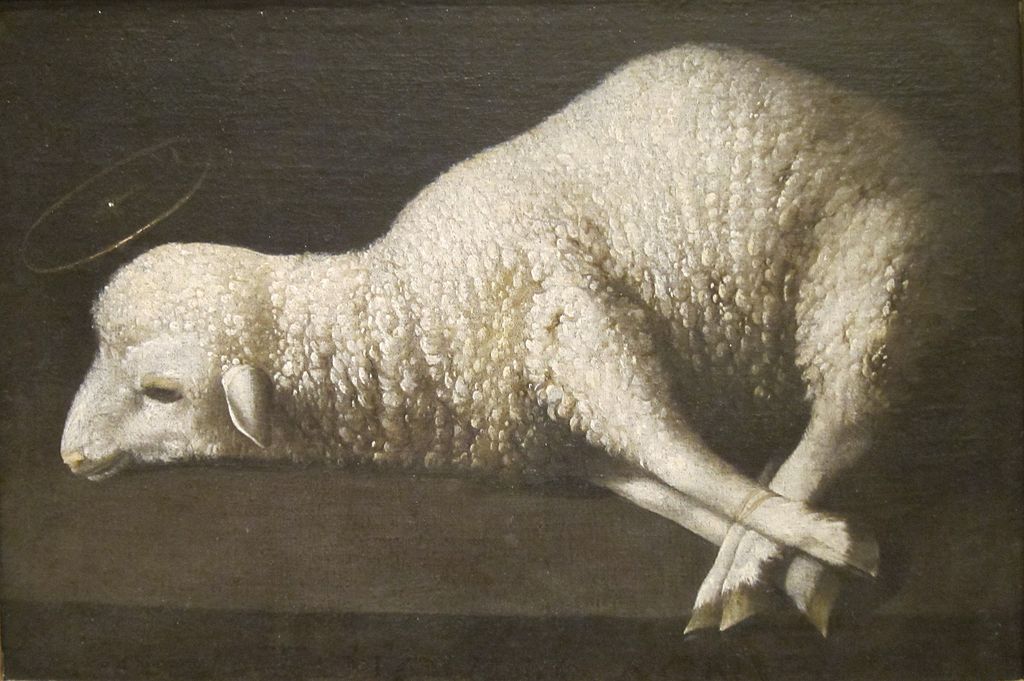
The Lamb of God: Emotional Surrender in Zurbarán's Angus Dei - The ...

Covenant theology also helps with our assurance.  I've known many people to struggle with assurance of salvation, particularly Christians brought up in the Highlands.  Assurance is sometimes confused with arrogance or over confidence.  But assurance of salvation is not about our goodness but about our security in what Christ has done.  Again to quote Ligon Duncan: '...lots of wonderful Christians struggle with assurance, for lots of different reasons. One of the reasons that we struggle with assurance is that, frankly, sometimes we’re so aware of our own personal sin and failure, in the past and in the present, that we have this sneaking suspicion, “I’m not sure that there’s something that really can cover my sin.” And Covenant theology comes along and says, “Look at what God has done in order to assure you of His love to you and the security of your salvation.”  If your sense of security with Him is based on anything in you, you’re toast, you’re done for, because as Thomas Boston used to say, “If men knew what was in my heart, I wouldn’t have four friends left in Scotland.” 

Covenant theology is a rich source of encouragement for us as it helps us to see that God's love for us was not an afterthought.  It wasn't a backup plan.  God has always been a covenant making and a covenant keeping God.  The covenants have always been based on God's grace and they have unfolded to reveal a rich and beautiful plan of salvation that climaxed at the cross of Christ.  Jesus is the fulfilment of of so many many covenant promises.  David's life has many twists and turns but at the end his great hope was in the God of the covenant. 


The Spirit of the Lord spake by me, and his word was in my tongue.
The God of Israel said, the Rock of Israel spake to me, He that ruleth over men must be just, ruling in the fear of God.
And he shall be as the light of the morning, when the sun riseth, even a morning without clouds; as the tender grass springing out of the earth by clear shining after rain.
Although my house be not so with God; yet he hath made with me an everlasting covenant, ordered in all things, and sure: for this is all my salvation, and all my desire, although he make it not to grow.
2 Samuel 23 v 2-5